Switching from VMware to eCloud
Due to licensing changes and associated price hikes, many VMware customers are looking for alternatives. With eCloud, we offer a full-featured, more cost-effective alternative that scales per virtual machine, based on open-source technology from the European company Proxmox. Find out exactly how the switch works and what it costs.

Does this sound familiar?
We hear from many customers about the challenges they face with their virtualization solutions.
Significant price increases at VMware
Due to the changes at VMware, the costs of your licenses and support contracts weigh heavily on the IT budget, especially if you are dealing with a growing environment.
Lack of quality support
You’re not getting the support you expect. Questions take too long to be answered, or the proposed solutions don’t meet your expectations.
No flexibility or control
You want more autonomy over your infrastructure and the ability to respond quickly to specific needs, but you keep running into VMware’s closed ecosystem.
What a switch to eCloud actually means
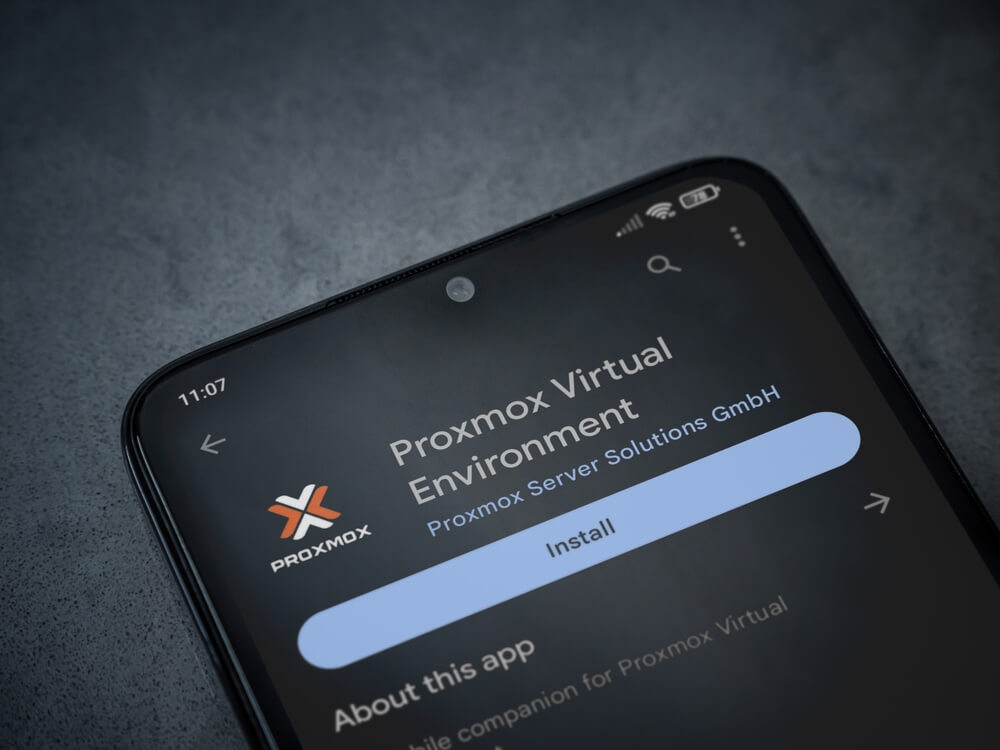
Your virtual machines remain virtual machines. What changes is the underlying layer: instead of ESXi and vCenter, your environment runs on Proxmox VE. And instead of a per-CPU-core licensing model, you agree on capacity and services for a fixed price.
The functionality you use today does not disappear. Clustering, high availability, live migration, distributed storage, and role-based access control are included as standard in Proxmox, with no additional licensing required.
Certain advanced VMware features are implemented differently or require additional configuration. We address this during the sizing phase, not midway through the migration.
Furthermore, the transition does not happen in a single step. We migrate in waves—by application group—starting with low-impact workloads to prove the process, with a rollback scenario for each wave.
Why our customers trust us


Your business case
What does it cost? What do you compare?
The question isn't just what eCloud costs, but whether you are comparing the right factors. Each model entails costs that are systematically underestimated in initial calculations.
For your current on-premises environment: hardware refreshes, hypervisor licenses, data center space and power, maintenance contracts, staff and training, and the reserve capacity maintained for usage spikes and growth.
For a hyperscaler: data egress, IOPS and storage tiers, snapshots, backups, support plans, and license mobility for Windows Server and SQL Server.
For eCloud: contract duration and notice periods, and the fact that you commit to a specific capacity rather than paying on an hourly basis.
The difference lies less in the cost level than in the cost structure. On-premises is largely CapEx with investment peaks; a hyperscaler involves variable OpEx that tracks your usage; and eCloud offers predictable OpEx.
Which model suits you best depends on the degree of variability you require: an environment with a stable baseline load would, under a variable model, essentially be paying for flexibility it doesn't use.

Why choose Epact as your partner?
What sets us apart from other private cloud providers?
Local support
You can rely on local experts to manage and maintain your cloud solution. Whether you have a question, issue, or challenge, we’re just a phone call or short visit away.
Full managed services
We handle the entire management of your network, storage, servers, and hypervisor layer, so you can fully focus on your business without worrying about your infrastructure.
Knowledge and experience
We combine hands-on expertise and proven experience with technologies like Proxmox, VMware, and others. We dare say we’ve seen and solved almost everything.
How do we handle a migration?
We tailor the process to your situation, but these steps always recur.
Sizing
Feedback
Implementation/migration
Documentation & training
Start managed services

From VMware Cloud Director to eCloud
If you're running a large environment on VMware Cloud Director today, migration comes with an extra layer of complexity.
Each tenant is an isolated island with its own NSX Edge router, and VMs, firewalling, NAT and IP configuration are all managed from a single console.
Moving everything at once means every VM has to succeed. If one doesn't, you have to roll back completely to where you started.
Epact has developed a pragmatic solution for this. We rebuild an identical environment in eCloud, with the same internal segments and a new router that isn't active yet.
We then extend each segment at layer 2 from vCloud to eCloud. This lets VMs move one by one and at your own pace, while the existing NSX Edge continues to handle routing and firewalling for both sides. Each VM has a brief interruption for the conversion, and DHCP reservations ensure every VM keeps its original IP address.
If a VM migration stalls, that's not a problem: the existing environment simply keeps running. This means we can work in phases. Only once all VMs have been migrated successfully do we remove the link. The eCloud firewall then takes over routing and firewalling, with a short, planned downtime. After that, little remains: reconfiguring static IPs inside the VMs if you want to, and moving your public addresses to the new IP space.
Our partners, your guarantee of top quality



Recent insights
Blogs, webinars and ebooks from our experts.

Got a specific question or challenge?
Talk to one of our experts. Virtually or face-to-face, no strings attached. Who knows, we might have exactly the answer or solution you’re looking for.
The other elements of eCloud
What else is there to say about eCloud?
Platform: Proxmox
eCloud runs on Proxmox Virtual Environment, a fully open-source virtualization platform of European origin. It offers a single console for your entire environment, enterprise-grade functionality included as standard rather than locked behind a separate license, and no per-CPU-core subscription fees.
Infrastructure & data centers
Beneath your virtual machines lies a clustered platform comprising enterprise-grade hardware, redundant storage, and a segmented network, all housed in professional data centers in Belgium. There is no shared computing capacity with unknown neighbors, and no investment cycle for you to plan.
Management & support
"Managed" is a word that only gains real meaning when you spell out the details. The difference between a successful partnership with an infrastructure provider and a difficult one almost always comes down to expectations that were never made explicit. We make them explicit: what we take over, what remains your responsibility, and who to contact if an issue arises.
Datasovereignty & compliance
Where is your data actually located, and under which jurisdiction? What happens if a foreign government demands access? Are you truly compliant, or do you simply assume so? These are the questions currently facing executive boards. Read how eCloud provides the answer: Belgian data centers, European technology, and compliance.