Municipality of Temse swaps VMware for Proxmox: stretched cluster across two of its own data centers
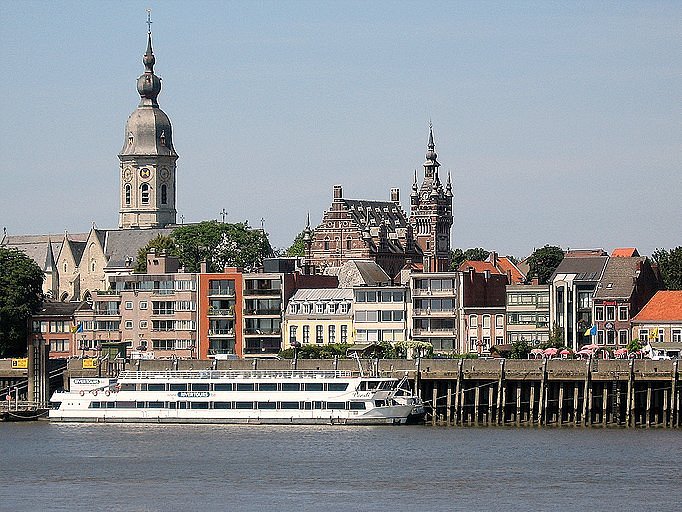
Key Takeaways
Challenge: A Dell VxRail environment at the end of its support period, with VMware licenses that became three times more expensive following the Broadcom acquisition and were converted to annual subscriptions. Additionally, there was a limited budget, with on-premises hosting and control over their own hardware as a hard requirement.
Solution: A Proxmox VE environment with Ceph storage as a stretched cluster across the municipality's two data centers, featuring a witness for failover, migration via Veeam, procurement via a framework agreement, and a support contract with Epact.
Result: A future-proof platform based on open standards, predictable costs without licensing shocks upon renewal, and successful DR tests.
Conclusion: For the municipality of Temse, Proxmox was the way to keep enterprise functionality on-premises without the associated price tag. As an external partner, Epact provided expertise during design and implementation and now handles local support.
The municipality of Temse is a local government that consciously keeps its IT infrastructure in-house, spread across two of its own data centers. The IT department supports all local government services. The entire environment ran on Dell VxRail with VMware, with backup and recovery via Veeam and, among other things, a large 4.5 TB file server.
When the VxRail environment neared the end of its support and VMware licenses became significantly more expensive following the acquisition by Broadcom, IT manager Robby De Bock faced a decision with long-term consequences.
The challenge: VxRail at the end of the road
VxRail combined managed Dell servers and VMware licenses into a single package. That model came under pressure in two ways simultaneously. The hardware reached the end of its support, and after the acquisition by Broadcom, VMware licenses became many times more expensive.
As with any local government, the budget was limited. At the same time, Temse was looking for a platform that would last for years without being locked into a single vendor again. Furthermore, the purchase had to comply with public procurement regulations: finding the right partner was one thing, but being able to engage that partner via a framework agreement was another.
The technical requirements were clear:
- On-premises remains.Control over their own hardware was a hard requirement. External hosting was therefore ruled out.
- Stretched cluster across two data centers, with redundancy and failover between both sites and a witness as an arbiter.
- The current set of virtual machines must remain operational. Additional growth was not in scope.
The solution: Proxmox and Ceph, fully on-premise
Temse chose Proxmox VE, a virtualization platform based on open standards (KVM), combined with Ceph as hyperconverged, software-defined storage. This gave the municipality enterprise functionality on-premise, without the enterprise price tag.
Epact designed the environment according to best practices as a stretched cluster across the municipality's two data centers, with a witness for failover. Both compute and storage are high availability. For stable, validated updates, the environment runs on the Proxmox Enterprise Repositories.
The purchase was made via a framework agreement, which simplified decision-making within the municipality.
The migration of the virtual machines was handled via Veeam. This provided a clear migration path and kept recovery options open during the transition, with no impact on service delivery. The IT department built up its own knowledge of the platform together with Epact, and after go-live, a support contract with Epact guarantees ongoing guidance.
“I believe you have to think out-of-the-box every now and then. Sometimes you just have to dare to make a certain choice. Like our choice for Proxmox.” Robby De Bock, IT Manager at the Municipality of Temse
The result: a tested failover between two of our own data centers
The transition provided the Municipality of Temse with:
- A future-proof platform based on open standards
- More control over the IT environment, and less dependence on a single vendor.
- Predictable costswithout licensing shocks upon contract renewal.
- High availability: mission-critical applications run in both data centers.
- A migration without impact on the service delivery.
The most tangible result came from the disaster recovery tests. The failover between both data centers worked, and a 4.5 TB file server was restored in approximately six hours. This gives the IT department a realistic view of recovery times, based on a test rather than an estimate.
What is it like working with Epact?
For a local government IT department, knowledge is often concentrated among a handful of people. "An external partner prevents a single point of failure from developing within the department. Open source proved to be production-ready, provided it is backed by the right partner support. With Epact for design, implementation, and support, we are never on our own."